Cooking holds your attention. Cleaning does not.
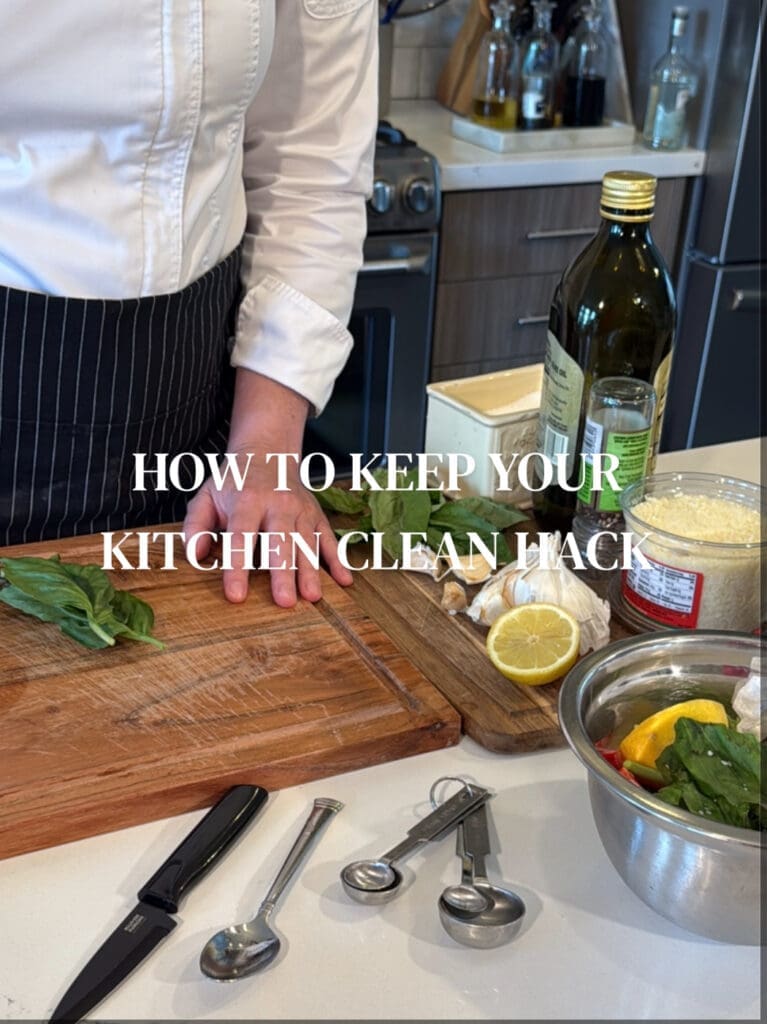
A messy kitchen has a way of following me around. This week, I worked on a video about organization, and it got me reflecting on how far I’ve come. I wasn’t always a clean cook, far from it. In the beginning, I had ingredients and tools scattered everywhere. But once I started working in restaurant kitchens, I quickly realized the easiest way to avoid the dreaded side-eye from chefs was to keep the neatest station possible.
I’ve always valued a clean workspace, but order didn’t come naturally. I would do things like fill cupcake tins at random, jumping from one space to another without thinking. Over time, I realized that order is what makes cleanliness sustainable. Now I move in a sequence, and it keeps both my process and my space under control.
Living in Los Angeles has its perks, an incredible restaurant scene, Hollywood experiences, and perfect weather. But those benefits don’t extend to spacious, affordable housing. Especially when you’re earning minimum wage in one of the most expensive cities in the country, you learn to make do with small kitchens and limited storage. Whether at home or at work, I’ve had to adapt. For me, disorganization while cooking became a kind of personal chaos I couldn’t tolerate.
Recently, Savannah, my social media director, and I were talking about what makes people feel anxious or frustrated in the kitchen. The answer was simple, mess and a lack of organization. Not having ingredients within reach creates unnecessary stress.
She asked me how I would visually demonstrate the importance of a clean workspace. After a moment, I tapped into my food styling instincts, thinking back to my early days and the influence of April Falzone, who taught me so much about creating intentional, on-camera “mess.”
As I built the scene, I recreated the kind of clutter that happens naturally, a squeezed lemon, cheese packaging, basil stems, garlic peels. It wasn’t about carelessness, it was about that moment in cooking where you’re focused on the next step and worried about getting the recipe right.
Then came the cleanup.
What stood out was how exciting it felt to demonstrate a clean, organized workflow that others could use. With an extra cutting board and a designated trash bowl, everything had a place, making it easier to contain the mess and move through each step with intention.
A big part of the challenge is this: a mess doesn’t come with a step by step guide the way a recipe does. Recipes tell you exactly what to do and when to do it. Cleanup does not. So you’re left trying to figure out where to start, what matters most, and how to move through it. For someone with ADHD, that lack of structure can stop you before you even begin. The brain doesn’t easily switch tasks, especially from something engaging like cooking to something repetitive like cleaning. That challenge is even greater if you’ve never been shown how to clean in a clear, structured way.
So instead of leaving cleanup as an afterthought, it helps to build it into the process.
Before you even start cooking, mark up your recipe and indicate where cleanup should happen. Treat those moments like steps, just as important as chopping or sautéing.
Have multiple towels and your cleaner out and ready to use. Not having to search for them removes one more barrier to starting.
From there, a few small, specific shifts can make a big difference:
- Keep a “reset moment” built into each transition. If something goes into the oven or needs a few minutes on the stove, use that exact window to clear one surface or load a few items.
- Limit your tools on purpose. If you only give yourself one knife and one cutting board, you naturally clean or reuse instead of piling up.
- Face the sink while you prep when possible. It creates a visual cue and shortens the distance between using and rinsing.
- Stack, don’t scatter. As soon as something is dirty, place it in a single area rather than leaving it where you used it. Even if you don’t wash it right away, it keeps the mess contained.
Of course, it’s one thing to stay organized when making a single dish. But what about cooking a full meal?
When I’m juggling multiple dishes, which is often, my strategy is simple, group ingredients by use. Everything needed for a specific dish stays together. As I finish with those ingredients, I put them away as a group. It cuts down on unnecessary movement and keeps the space manageable.
To recap:
- Keep a trash bowl and an extra cutting board nearby for organization
- Clean as you go
- Group ingredients based on the dish you’re preparing
- Put ingredients away in groups once you’re done with them
- Mark up your recipe with built-in cleanup steps
- Keep towels and cleaner within reach
These small, simple habits make a huge difference. Cooking becomes less stressful, more efficient, and honestly, a lot more enjoyable.
Watch a quick video Keep your Kitchen Clean
